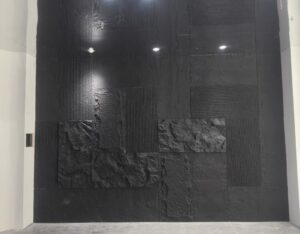
PU stone wall panels are becoming increasingly popular in residential, commercial, and exterior wall decoration projects. They are designed to reproduce the appearance of natural stone while offering a lighter weight, easier installation, and greater design flexibility.
But what exactly is a PU stone wall panel? How is it made? Where can it be used? And how does it compare with real stone and other decorative wall panels?
This complete guide explains everything you need to know about PU stone wall panels.
What Is a PU Stone Wall Panel?
A PU stone wall panel is a decorative wall panel made primarily from polyurethane (PU) and molded to reproduce the texture, shape, and appearance of natural stone.
PU is a lightweight polymer material that can be formed into detailed three-dimensional textures. During manufacturing, molds are used to create realistic surfaces such as stacked stone, slate, rock, brick, and other architectural finishes.
Unlike traditional natural stone, PU stone panels are manufactured as relatively lightweight decorative panels that can be transported and installed more easily.
PU stone wall panels are commonly used for:
- Interior feature walls
- Exterior decorative walls
- Villa façades
- Living rooms
- TV background walls
- Fireplaces
- Hotels and resorts
- Restaurants and cafés
- Retail stores
- Offices
- Commercial buildings
The basic idea is simple:
Natural-stone appearance + lightweight PU construction + faster installation.
What Does “PU” Mean?
PU stands for polyurethane, a polymer widely used in products ranging from insulation and furniture to automotive components and construction materials.
For decorative wall panels, polyurethane can be formed into complex three-dimensional surfaces.
This makes it possible to reproduce details such as:
- Stone grain
- Rock edges
- Natural cracks
- Layered textures
- Uneven surfaces
- Brick patterns
- Slate textures
The exact formulation, density, surface coating, reinforcement, and manufacturing process can vary between manufacturers. Therefore, buyers should compare actual technical specifications and samples rather than judging products only by the name “PU.”
How Are PU Stone Wall Panels Made?
Although manufacturing processes vary between factories, PU stone panels generally go through several major stages.
1. Mold Development
The manufacturer creates molds based on the desired stone or architectural design.
High-quality molds are important because they determine how realistic the final texture looks.
2. PU Material Preparation
Polyurethane components are prepared according to the required formulation and product specifications.
Factors such as density and formulation can influence the panel’s physical properties.
3. Molding
The PU material is introduced into the mold and allowed to form the desired three-dimensional shape.
This is where the stone texture and panel structure are created.
4. Demolding
After the material has sufficiently cured, the panel is removed from the mold.
5. Surface Finishing
Depending on the product, manufacturers may apply multiple colors, coatings, shading, or other finishing processes to create a more realistic stone appearance.
6. Quality Control
Finished panels can be inspected for:
- Dimensions
- Surface appearance
- Color consistency
- Texture
- Structural integrity
- Packaging quality
7. Packing and Shipment
Panels are packed according to the requirements of the destination market and prepared for container or LCL shipment.
For B2B buyers, packaging is particularly important because wall panels are relatively large products and can be damaged if improperly packed.
What Are the Main Advantages of PU Stone Wall Panels?
1. Lightweight
One of the most important advantages of PU stone panels is their relatively low weight compared with many traditional stone finishes.
Lower weight can simplify:
- Transportation
- Handling
- Installation
- Material storage
It can also make PU panels attractive for renovation projects where adding significant weight to an existing structure is undesirable.
However, the actual weight depends on the panel’s dimensions, density, structure, and manufacturer.
2. Realistic Stone Appearance
Modern molding and surface-finishing technologies allow PU panels to reproduce highly detailed stone textures.
Different designs can imitate:
- Natural rock
- Stacked stone
- Slate
- Sandstone
- Brick
- Mountain stone
- Modern architectural stone
The quality of the mold and finishing process has a major influence on how realistic the finished product looks.
3. Faster Installation
PU stone panels are generally designed to be installed as decorative wall panels rather than built piece by piece like traditional masonry.
Depending on the wall condition, panel design, adhesive system, tools, and installer experience, this can reduce installation complexity and project time.
Typical installation steps may include:
Measure → Cut → Apply adhesive → Position → Fix → Finish joints
Always follow the installation instructions supplied by the specific manufacturer.
4. Easy to Cut and Handle
Compared with many heavy stone products, PU panels are easier to transport and handle on site.
They can generally be cut using suitable hand or power tools according to the manufacturer’s instructions.
This is particularly useful when installers need to work around:
- Windows
- Doors
- Electrical outlets
- Corners
- Columns
- Pipes
- Irregular wall sections
5. Wide Range of Designs
PU technology allows manufacturers to develop many different textures and styles.
For example:
Stone Series
- Rock Stone
- Stacked Stone
- Slate
- Mushroom Stone
- Mountain Stone
Brick Series
- Red Brick
- Aged Brick
- Modern Brick
- Industrial Brick
Modern Series
- Geometric
- 3D
- Minimalist
- Luxury
- Contemporary
This design flexibility allows distributors and designers to select products for different architectural styles and markets.
Are PU Stone Wall Panels Waterproof?
This is one of the most common questions from buyers.
PU itself has moisture-resistant properties, but the water resistance of a finished PU stone wall panel depends on the complete product construction and manufacturing process.
The surface coating, joints, installation method, substrate, and accessories can all affect the performance of the finished wall system.
For outdoor or wet environments, buyers should ask the manufacturer for specific test data and installation recommendations.
Don’t assume that every PU panel on the market has exactly the same waterproof performance.
Can PU Stone Panels Be Used Outdoors?
Yes, some PU stone wall panels are designed for exterior applications.
Common exterior applications include:
- Villa façades
- Garden walls
- Entrance walls
- Outdoor entertainment areas
- Commercial façades
- Resort buildings
- Feature walls
However, outdoor suitability depends on the specific product.
Before using a PU panel outdoors, check the manufacturer’s technical information regarding:
- UV exposure
- Temperature range
- Moisture
- Weather resistance
- Surface coating
- Installation system
- Local building requirements
For projects in areas with strong sunlight or extreme weather, appropriate product testing is especially important.
Where Can PU Stone Wall Panels Be Used?
PU stone panels are suitable for many different decorative applications.
Residential Applications
Living Room
Create a stone feature wall behind a TV, sofa, or fireplace.
Bedroom
Use stone textures as an accent wall to create a warm or natural atmosphere.
Entrance
PU stone can be used around entryways and columns to create a distinctive architectural appearance.
Villa
PU stone panels can be used for selected interior and exterior architectural areas.
Commercial Applications
PU stone panels are also used in commercial decoration projects.
Hotels
Feature walls, reception areas, corridors, restaurants, and public spaces.
Restaurants
Stone textures can create rustic, industrial, modern, or natural design themes.
Retail Stores
Decorative stone walls can help establish a distinctive brand environment.
Offices
PU panels can be used for reception backgrounds, meeting rooms, and feature walls.
PU Stone vs Natural Stone
One of the most important comparisons is PU stone versus real stone.
| Feature | PU Stone Wall Panel | Natural Stone |
|---|---|---|
| Appearance | Realistic stone appearance | Natural |
| Weight | Lightweight | Heavy |
| Handling | Easier | More difficult |
| Installation | Generally simpler | More labor-intensive |
| Transportation | Easier | More costly due to weight |
| Design selection | Wide range of manufactured designs | Depends on available stone |
| Customization | Manufacturer-dependent | Limited |
| Installation speed | Generally faster | Generally slower |
| Structural load | Lower than traditional stone | Higher |
| Material character | Manufactured | Natural |
The right choice depends on the project. Natural stone may be preferred when authentic geological material is specifically required, while PU panels can be attractive when lightweight construction, installation efficiency, design variety, or transportation are important.
PU Stone vs WPC Wall Panels
PU and WPC serve somewhat different design purposes.
PU stone panels are mainly used when the desired appearance is:
- Stone
- Rock
- Brick
- Natural architectural texture
WPC wall panels are commonly associated with:
- Wood
- Fluted surfaces
- Slat walls
- Modern linear designs
Therefore, the choice should be based on the desired appearance, performance requirements, installation system, and project budget.
For stone-effect walls, PU is a natural category to consider.
How Are PU Stone Wall Panels Installed?
A typical installation process may look like this:
Step 1: Prepare the Wall
Make sure the substrate is clean, dry, stable, and suitable for the recommended installation system.
Step 2: Measure the Area
Measure the wall and plan the panel layout before cutting.
Step 3: Cut the Panels
Cut panels according to the required dimensions and openings.
Step 4: Apply the Recommended Adhesive
Use an adhesive or fixing method approved for the particular PU panel and substrate.
Step 5: Position the Panel
Place the panel carefully and ensure proper alignment.
Step 6: Fix and Secure
Depending on the product and installation environment, additional mechanical fixing may be recommended.
Step 7: Finish the Joints
Follow the manufacturer’s instructions for hiding or finishing seams.
Step 8: Inspect the Finished Wall
Check alignment, joints, corners, surface appearance, and fixing.
Important: Installation methods differ between products. Always follow the manufacturer’s installation guide rather than applying one installation method to every PU panel.
What Should You Check Before Buying PU Stone Panels?
Whether you are a homeowner, contractor, importer, or distributor, don’t evaluate PU panels based only on appearance.
Consider these factors:
1. Material
Ask what type of PU material and formulation are used.
2. Density
Density can affect weight and physical properties.
3. Panel Thickness
Compare thickness between different products rather than assuming products with similar appearances have identical construction.
4. Surface Finish
Request actual samples to evaluate texture, color, and realism.
5. Color Consistency
For large projects, ask how the manufacturer controls color consistency between production batches.
6. Outdoor Performance
If the product will be installed outdoors, request relevant weathering or UV information.
7. Fire Performance
Where required by local regulations, request applicable fire-test documentation.
8. Installation System
Check recommended adhesives, fasteners, accessories, and substrate requirements.
9. Packaging
Ask how the panels are protected during international transportation.
10. Factory Capability
For wholesale orders, investigate:
- Production capacity
- Quality control
- OEM capability
- Lead time
- Export experience
- Container loading
- After-sales support
How to Choose a PU Stone Wall Panel Manufacturer
For importers and distributors, choosing the manufacturer can be more important than choosing a single product.
A reliable supplier should be able to provide clear information about:
Product
Dimensions, thickness, weight, materials, available designs, and technical specifications.
Quality
Quality-control procedures and relevant test reports.
Customization
OEM colors, packaging, private labeling, and potentially custom designs.
Samples
Actual product samples before bulk production.
Production
Factory photos, production information, capacity, and quality-control processes.
Packaging
Export-ready packaging suitable for long-distance transportation.
Communication
Fast and clear responses to technical and commercial questions.
A good long-term supplier should function as more than a source of panels. For distributors, the ideal relationship is a combination of product supply, technical support, marketing support, and reliable communication.
Is PU Stone a Good Alternative to Traditional Stone?
PU stone wall panels are not a universal replacement for natural stone.
Instead, they are an alternative decorative solution for projects where factors such as:
- Lower weight
- Easier handling
- Faster installation
- Design flexibility
- Transportation efficiency
- Decorative appearance
are important.
For projects that specifically require genuine natural stone, structural masonry, or particular fire and building-code performance, natural materials may still be required.
The best material depends on the application.
The Future of PU Wall Panels
The PU wall panel industry is moving beyond simple imitation stone.
New product development is increasingly focused on:
- More realistic textures
- Larger panel formats
- Modern architectural designs
- Better surface finishing
- Exterior applications
- Improved installation systems
- Customized colors
- New decorative textures
For distributors and importers, this creates an opportunity to differentiate through design selection rather than price alone.
A supplier that can continuously introduce new designs, maintain consistent quality, and provide strong marketing support can become a more valuable long-term partner.
Why Choose FOROREE PU Wall Panels?
FOROREE focuses on PU stone and decorative PU wall panels for global residential and commercial markets.
Our goal is not simply to manufacture wall panels, but to provide distributors, contractors, designers, and project buyers with a complete PU wall-panel solution.
FOROREE focuses on:
Realistic Designs
Stone and architectural textures developed for contemporary interior and exterior decoration.
Lightweight Construction
PU panels offer a lightweight alternative to many traditional stone finishes.
Design Variety
Multiple stone, brick, rock, and modern decorative styles for different markets.
OEM & Customization
Support for customized colors, packaging, private labeling, and selected OEM requirements.
Factory Direct Supply
Direct communication with the manufacturing team for samples, quotations, production, and shipment.
B2B Support
Product information, installation guidance, marketing materials, and project support for distributors and professional buyers.
Frequently Asked Questions
What does PU stand for in PU stone?
PU stands for polyurethane, the polymer material used to manufacture the decorative wall panel.
Are PU stone panels real stone?
No. PU stone panels are manufactured decorative panels designed to reproduce the appearance and texture of natural stone.
Are PU stone panels lightweight?
Yes. PU stone panels are designed to be substantially lighter than many traditional stone finishes, although actual weight varies by product.
Can PU stone panels be used outdoors?
Some PU stone products are specifically designed for exterior applications. Always check the manufacturer’s technical specifications before outdoor installation.
Are PU wall panels easy to install?
They are generally designed for relatively simple installation compared with traditional masonry, but the exact installation process depends on the product and substrate.
Can PU stone panels be customized?
Many manufacturers offer customization such as colors, packaging, private labeling, and OEM designs. The available options depend on the supplier.
How long do PU stone panels last?
There is no single lifespan applicable to every PU panel. Service life depends on the product formulation, installation, environment, UV exposure, maintenance, and other factors.
How do I choose a PU stone panel supplier?
Compare actual samples, technical specifications, quality-control procedures, test reports where relevant, factory capability, packaging, MOQ, lead time, OEM support, and after-sales service.
Conclusion
PU stone wall panels are lightweight decorative wall panels made from polyurethane and designed to reproduce the appearance of natural stone and other architectural surfaces.
Their combination of realistic textures, relatively low weight, design flexibility, and potentially simpler installation makes them an increasingly useful option for residential, commercial, and selected exterior applications.
For homeowners, designers, contractors, and distributors, the key is not simply choosing the cheapest PU panel. The better approach is to compare material quality, design, technical performance, installation requirements, factory capability, and long-term supplier support.
For distributors and project buyers looking for a PU wall panel manufacturing partner, FOROREE provides PU stone and decorative PU wall panel solutions designed for global markets.
Explore the FOROREE PU Wall Panel Collection → Get Samples → Request a Quote