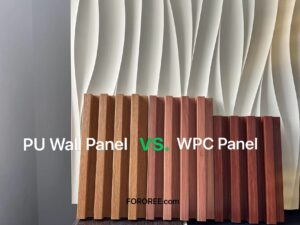
PU Wall Panel vs WPC Wall Panel: Which Is Better?
When choosing a modern wall decoration material, PU wall panels and WPC wall panels are two popular options.
Both materials can create attractive feature walls, but they are designed with different materials, textures, installation methods, and applications in mind.
So, PU wall panel vs WPC wall panel—which is better?
There is no single answer. The better choice depends on the appearance you want, the installation environment, the project requirements, transportation considerations, and your budget.
In this guide, we compare PU and WPC wall panels across the factors that matter most to homeowners, designers, contractors, importers, and distributors.
PU Wall Panel vs WPC Wall Panel: Quick Comparison
| Feature | PU Wall Panel | WPC Wall Panel |
|---|---|---|
| Main material | Polyurethane | Wood-plastic composite |
| Typical appearance | Stone, rock, brick, 3D textures | Wood, fluted, slatted, linear textures |
| Weight | Generally lightweight | Generally lightweight to medium |
| Texture | Deep 3D / realistic architectural texture | Linear / wood-grain texture |
| Design style | Stone, industrial, rustic, architectural | Modern, minimalist, wood-inspired |
| Installation | Generally simple | Generally simple |
| Cutting | Relatively easy with suitable tools | Requires suitable cutting tools |
| Moisture resistance | Product-dependent | Product-dependent |
| Outdoor use | Product-dependent | Product-dependent |
| Customization | Manufacturer-dependent | Manufacturer-dependent |
| Natural appearance | Mainly stone and architectural imitation | Mainly wood and architectural imitation |
| Best applications | Stone-feature walls, façades, fireplaces, commercial features | Slat walls, TV walls, offices, bedrooms, modern interiors |
Important: PU and WPC products vary significantly between manufacturers. Always compare the actual product specifications, test reports, installation instructions, and samples.
1. What Is a PU Wall Panel?
A PU wall panel is a decorative wall panel made primarily from polyurethane.
PU technology allows manufacturers to create detailed three-dimensional surfaces that imitate materials such as:
- Natural stone
- Rock
- Stacked stone
- Brick
- Slate
- Concrete
- Architectural textures
PU panels are particularly attractive when the goal is to create a strong 3D decorative effect without installing heavy traditional materials.
Depending on the product, PU panels can be used for both interior and selected exterior applications.
2. What Is a WPC Wall Panel?
WPC stands for Wood Plastic Composite.
WPC wall panels are composite products made using wood-based fibers or flour combined with polymer materials and other additives.
They are commonly manufactured in designs such as:
- Wood slats
- Fluted panels
- Groove panels
- Linear panels
- Decorative acoustic-style walls
- Wood-grain surfaces
WPC has become particularly popular in modern interior design because its appearance works well with minimalist, contemporary, Scandinavian, and modern architectural styles.
3. The Biggest Difference: Design Language
This is probably the most important difference between PU and WPC.
PU Wall Panels
PU is especially suitable when you want:
Stone + texture + depth + architectural character
Common PU designs include:
- Rock
- Stacked stone
- Brick
- Slate
- Mountain stone
- Concrete effect
- 3D geometric textures
WPC Wall Panels
WPC is particularly suitable when you want:
Wood + lines + rhythm + modern simplicity
Common WPC designs include:
- Fluted wall panels
- Wood slats
- Grooved panels
- Timber effects
- Linear designs
Therefore, the first question shouldn’t be:
“Which material is better?”
Instead ask:
“What kind of wall do I want to create?”
If you want a stone feature wall, PU is usually the more natural category.
If you want a modern wood-slat or fluted wall, WPC is usually the more natural category.
4. PU vs WPC: Appearance
PU Wall Panels
Modern PU molding technology can reproduce highly detailed surfaces.
A good PU panel can include:
- Irregular stone edges
- Deep grooves
- Natural-looking cracks
- Layered surfaces
- Rock textures
- Three-dimensional relief
This makes PU particularly suitable for feature walls where texture is the main visual element.
WPC Wall Panels
WPC panels typically emphasize:
- Straight lines
- Repeated grooves
- Wood grain
- Vertical or horizontal rhythm
- Clean architectural geometry
This makes them popular for modern interior walls.
In simple terms:
PU = texture
WPC = rhythm
This isn’t an absolute rule, but it is a useful way to understand the difference between the two product categories.
5. Weight
Both PU and WPC products can be considerably easier to handle than traditional stone, brick, or solid wood products, but the actual weight depends on the specific construction.
PU panels are generally designed to be lightweight.
This can make them convenient for:
- Renovation
- Feature walls
- Large decorative surfaces
- Transportation
- Manual installation
WPC panels can also be relatively lightweight compared with some traditional construction materials, although their weight varies considerably according to the WPC formulation, profile, dimensions, and internal structure.
For international buyers, always compare:
kg/panel and kg/m²
rather than simply asking whether a product is “lightweight.”
6. Installation
Both PU and WPC wall panels can be designed for relatively straightforward installation.
However, their installation systems can be different.
PU Installation
A typical PU installation may involve:
Measure → Cut → Apply adhesive → Position → Fix → Finish
Depending on the product and substrate, mechanical fixing may also be recommended.
PU panels can be convenient for installers because they are generally easy to handle and can be cut to fit around:
- Doors
- Windows
- Columns
- Electrical outlets
- Corners
WPC Installation
WPC wall panels may use:
- Clips
- Battens
- Screws
- Adhesives
- Mounting systems
The installation method depends on the particular WPC profile.
For large slatted systems, installers may need to pay particular attention to alignment because the visual effect depends heavily on maintaining consistent spacing and straight lines.
7. Which Is Easier to Cut?
Both materials can be cut, but the appropriate tool depends on the specific product.
PU
PU decorative panels are generally relatively easy to cut using suitable hand or power tools.
This can be useful when installers need to create:
- Corner cuts
- Door openings
- Window openings
- Electrical openings
- Irregular shapes
WPC
WPC can also be cut with appropriate woodworking or power tools.
Because WPC products can have different densities and profiles, the manufacturer should specify the recommended cutting method.
8. Moisture and Water Resistance
This is a topic where buyers should be careful.
It is common to see manufacturers advertise both PU and WPC as “waterproof,” but not every product has identical water resistance.
For either material, performance depends on:
- Material formulation
- Surface treatment
- Product structure
- Joints
- Installation
- Substrate
- Exposure conditions
Therefore, instead of asking only:
“Is it waterproof?”
ask:
“What water-resistance testing has been performed on this specific product?”
For bathrooms, kitchens, exterior walls, or other moisture-exposed areas, follow the manufacturer’s application instructions.
9. Outdoor Applications
Both PU and WPC products can be available for exterior use, but not every product is suitable for outdoor installation.
PU
Certain PU stone panels are designed for exterior decorative applications such as:
- Villa façades
- Entrance walls
- Garden walls
- Outdoor feature walls
- Commercial buildings
WPC
Certain exterior-grade WPC products can be used for:
- Exterior walls
- Façades
- Balcony areas
- Outdoor architectural features
Before choosing either material for an outdoor project, check:
- UV resistance
- Weather resistance
- Temperature range
- Moisture performance
- Surface coating
- Installation system
For projects exposed to strong sunlight, heavy rain, freezing temperatures, or large temperature changes, product-specific testing becomes particularly important.
10. Durability
Neither “PU” nor “WPC” automatically defines the durability of a product.
Different manufacturers use different formulations and production processes.
PU durability can depend on:
- PU density
- Material formulation
- Surface coating
- UV exposure
- Temperature
- Installation
- Maintenance
WPC durability can depend on:
- Wood/polymer composition
- Density
- Additives
- Surface treatment
- Moisture exposure
- UV exposure
- Installation
For professional projects, request technical documentation instead of relying on generic marketing claims.
11. Maintenance
Both materials are generally designed to provide relatively low-maintenance decorative surfaces, but the maintenance requirements depend on the exact product.
PU
Maintenance may mainly involve:
- Regular dust removal
- Gentle cleaning
- Avoiding unsuitable chemicals
- Repairing surface damage when necessary
WPC
WPC wall panels can generally be cleaned with suitable household or commercial cleaning methods, depending on the manufacturer’s recommendations.
For both materials, aggressive chemicals, excessive moisture, or unsuitable cleaning tools should be avoided unless specifically approved by the manufacturer.
12. PU Wall Panel vs WPC: Design Applications
This is where the differences become very clear.
Choose PU for:
Stone Feature Walls
PU is especially suitable for creating stone-effect walls.
Fireplace Walls
Stone and brick-style PU panels can create a strong architectural effect.
Villa Exteriors
Selected exterior-grade PU products can be used for decorative façade elements.
Restaurant Interiors
Rock, brick, and industrial PU designs can work well with rustic or industrial concepts.
Hotel Feature Walls
PU can create strong visual focal points in reception areas, corridors, restaurants, and suites.
Commercial Feature Walls
Three-dimensional PU designs can be used to create distinctive branded environments.
Choose WPC for:
TV Walls
Fluted and slatted WPC panels are widely used for contemporary TV backgrounds.
Bedroom Walls
Wood-inspired textures work well with warm, minimalist interiors.
Office Interiors
Linear WPC panels can complement modern office design.
Reception Areas
Vertical slat walls can create a clean architectural appearance.
Acoustic-Style Decorative Walls
Some WPC slat systems are combined with acoustic backing materials for decorative acoustic applications.
Modern Residential Interiors
WPC is particularly suited to minimalist and contemporary spaces.
13. PU vs WPC: Which Looks More Premium?
There is no objective winner here.
“Premium” is a design judgment that depends on the architecture, material quality, installation, lighting, and surrounding furniture.
A high-quality WPC fluted wall can look extremely sophisticated in a modern interior.
A well-designed PU stone wall can look equally impressive in a villa, hotel, restaurant, or commercial environment.
The important thing is matching the material to the design concept.
14. PU vs WPC: Which Is More Cost-Effective?
The cheapest material price does not necessarily produce the lowest project cost.
Consider the complete cost:
Material + accessories + transportation + labor + installation + maintenance
For PU, potential cost advantages can come from:
- Lightweight handling
- Efficient transportation
- Simple cutting
- Relatively straightforward installation
For WPC, project economics can depend on:
- Panel/profile design
- Mounting system
- Accessories
- Installation structure
- Product density
- Local labor costs
For a professional project, compare the total installed cost per square meter rather than only the factory quotation.
15. PU vs WPC for International Importers
This is particularly important for distributors.
If you are importing wall panels from China, don’t compare only the EXW or FOB price.
Consider:
Product
- Size
- Thickness
- Weight
- Density
- Surface finish
Packaging
- Carton size
- Protection
- Pallet requirements
- Container loading
Logistics
- CBM
- Weight
- Loading quantity
- Freight
Commercial
- MOQ
- Lead time
- OEM
- Private label
- Sample policy
Marketing
- Catalog
- Product photos
- Installation videos
- Display samples
- Project images
The product with the lowest factory price may not have the lowest landed cost.
16. PU Wall Panel vs WPC Wall Panel for Distributors
For distributors, the two products can actually complement each other rather than compete directly.
Imagine a wall-decoration showroom offering:
PU COLLECTION
STONE
- Rock Series
- Stacked Stone Series
- Slate Series
- Brick Series
WPC COLLECTION
WOOD
- Fluted Series
- Slat Series
- Linear Series
- Modern Wood Series
This allows a distributor to sell different wall-design solutions to different customers.
For a wall-decoration company, PU + WPC can therefore create a broader showroom offering.
17. What Should You Ask a PU or WPC Manufacturer?
Before placing a bulk order, ask the supplier for:
Product Specifications
- Panel dimensions
- Thickness
- Weight per panel
- Weight per m²
- Material composition
- Surface treatment
Performance
- Water-resistance information
- UV/weathering information
- Fire-test documentation where applicable
- Recommended temperature range
- Installation requirements
Quality
- Sample availability
- Color consistency
- Dimensional tolerance
- Quality-control procedures
Export
- Packaging details
- Carton dimensions
- Loading quantity
- MOQ
- Lead time
OEM
- Custom colors
- Private label
- Custom packaging
- Custom designs
A professional manufacturer should provide clear answers and relevant documentation.
18. PU Wall Panel or WPC Wall Panel: Which One Should You Choose?
Use the following as a simple starting point.
Consider PU when your project needs:
Stone appearance
Deep 3D texture
Rock or brick design
Lightweight decorative panels
Villa or façade aesthetics
Rustic or industrial styles
Architectural feature walls
Consider WPC when your project needs:
Wood appearance
Fluted walls
Vertical slats
Linear patterns
Minimalist interiors
Modern TV walls
Contemporary office or residential design
19. Can PU and WPC Be Used Together?
Absolutely.
In fact, combining them can create more interesting interior designs.
For example:
PU Stone + WPC Fluted Panel
can be used to create a feature wall combining natural texture with modern linear elements.
Other combinations include:
- PU stone + wood slats
- PU brick + WPC
- PU geometric panel + fluted WPC
- PU fireplace wall + WPC TV wall
- Stone-effect PU + natural wood
This is particularly useful for interior designers who want to create contrast between texture and rhythm.
20. Why Choose FOROREE PU Wall Panels?
FOROREE specializes in PU stone and decorative PU wall panels for international residential and commercial markets.
Our focus is on developing PU products that combine:
Realistic Texture
Detailed stone, rock, brick, and architectural surfaces.
Lightweight Design
A practical alternative for projects where easier handling and installation are important.
Modern Collections
Traditional stone isn’t the only direction. Modern geometric and architectural PU designs can also be developed for contemporary interiors.
OEM & Private Label
Support for selected customized colors, packaging, and private-label projects.
B2B Support
Samples, product information, quotations, packaging, installation guidance, and export coordination for professional buyers.
Frequently Asked Questions
Is PU better than WPC?
Neither material is universally better. PU is particularly suitable for stone, rock, brick, and deep 3D decorative designs, while WPC is particularly suitable for wood, fluted, slatted, and linear designs.
Is PU cheaper than WPC?
There is no universal price difference. Product dimensions, density, design, quantity, manufacturer, shipping, accessories, and installation all affect the total cost.
Is PU lighter than WPC?
It depends on the specific products. Compare the actual weight per panel or square meter rather than relying on the material name.
Is PU more waterproof than WPC?
Water resistance depends on the exact formulation, construction, coating, joints, and installation. Request product-specific test data from the manufacturer.
Can PU wall panels be used outdoors?
Some PU panels are designed for exterior applications. Check the manufacturer’s UV, weathering, temperature, moisture, and installation specifications.
Can WPC wall panels be used outdoors?
Some WPC products are designed for exterior use, while others are intended only for interiors. Always check the product specification.
Which is better for a TV wall, PU or WPC?
Both can work. WPC is particularly suited to modern fluted and slatted TV walls, while PU is more suitable when you want a stone, brick, rock, or three-dimensional feature wall.
Which is better for a hotel project?
Both can be suitable. PU can provide stone and architectural textures, while WPC can provide wood and linear designs. The choice depends on the hotel’s design concept and technical requirements.
Which is better for exterior walls?
The answer depends on the specific exterior-grade product, climate, building requirements, and installation system. Compare product-specific weather, UV, moisture, and fire-performance data.
Conclusion
PU wall panels and WPC wall panels are not simply competing materials—they are two different approaches to wall decoration.
PU is particularly strong in stone, rock, brick, and three-dimensional architectural textures.
WPC is particularly strong in wood, fluted, slatted, and linear modern designs.
For a stone-effect feature wall, PU may be the more natural choice.
For a contemporary wood-slat wall, WPC may be the more appropriate option.
For a complete wall-decoration showroom, the two materials can also complement each other by providing customers with different design solutions.
The best choice should be based on design, application, installation, technical performance, total installed cost, and the specific product—not simply the material name.
If you are looking for a dedicated PU wall panel manufacturer for stone, brick, rock, and modern decorative designs, FOROREE provides PU wall panel solutions for distributors, contractors, designers, and project buyers worldwide.
Explore the FOROREE PU Wall Panel Collection → Request Samples → Get a Wholesale Quote